

The Quick Rundown
- Enterprise SEO applies to large, complex websites with thousands to millions of pages, requiring scalable strategy, cross-functional governance, and direct revenue accountability.
- The core difference from traditional SEO is not just scale, it is organizational complexity, technology requirements, and the need to connect organic search directly to board-level business metrics.
- The biggest challenges are technical debt at scale, internal bureaucracy slowing implementation, change management during site migrations, international SEO complexity, and the rapid rise of AI-powered answer engines.
- The ROI case is compelling: B2B SaaS companies see an average 702% return from SEO over three years, with organic leads closing at 14.6% versus 1.7% for outbound, and a cost per lead of $147 versus $280 for paid search.
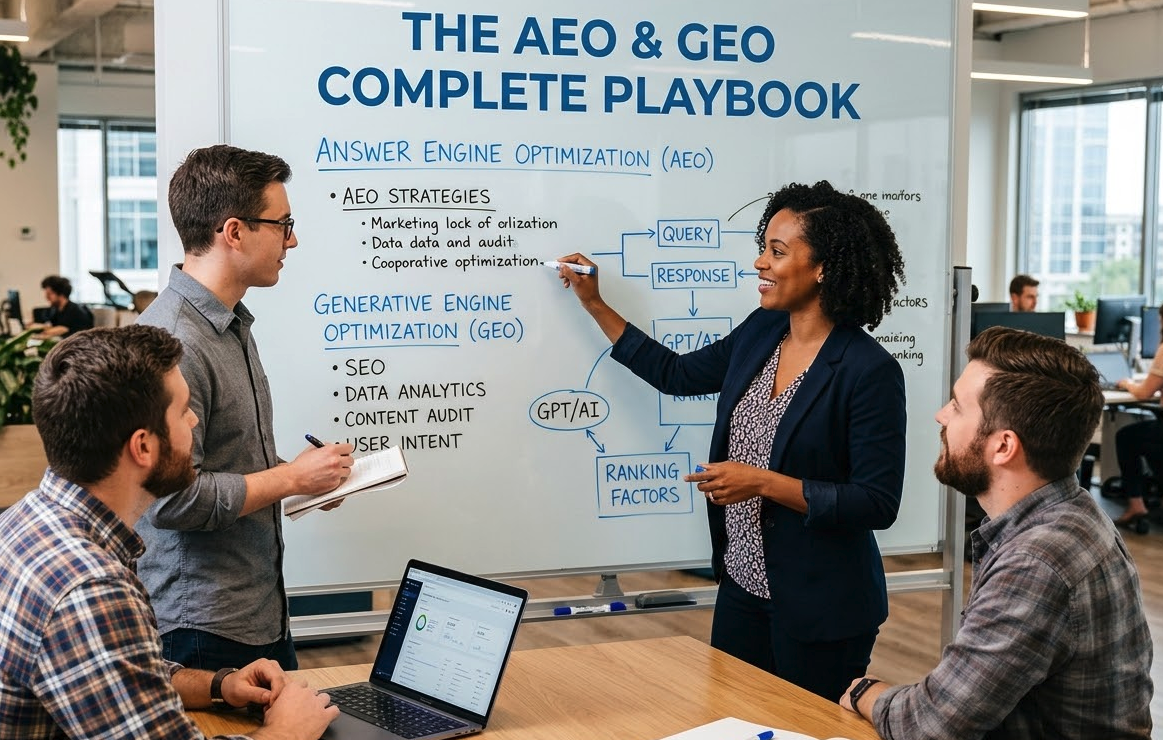
- A successful enterprise SEO program is built on four pillars: Technical SEO at scale, a data-driven content strategy, enterprise digital PR and link building, and Answer Engine Optimization (AEO) for AI search visibility.
- Governance is non-negotiable. The most effective organizations establish an SEO Center of Excellence (CoE) that owns strategy, standards, training, and cross-departmental alignment.
- Enterprise SEO requires specialized technology. Platforms like Conductor, BrightEdge, seoClarity, or Botify are capable of processing millions of URLs, unifying data sources, and providing real-time technical monitoring.
- In 2026, the discipline is being redefined by AI search. Google AI Mode, ChatGPT Search, and Perplexity are decoupling impressions from clicks, and brands that structure content for AI citation will capture disproportionate organic market share.
Enterprise SEO has evolved from a technical marketing function into a board-level strategic priority. With the global SEO software market valued at $74.6 billion and large organizations capturing over 55% of market revenue, the stakes have never been higher. Managing search visibility across thousands or millions of pages requires more than simply scaling up traditional tactics. It demands a fundamental shift in strategy, governance, technology, and organizational alignment.
In an era defined by generative AI, answer engines, and increasingly complex website architectures, organic growth at the enterprise level represents both a massive opportunity and a formidable challenge. This comprehensive playbook breaks down exactly what enterprise SEO is, how it differs from traditional approaches, the specific strategies required to overcome its unique challenges, and the frameworks needed to turn organic search into a scalable, high-ROI revenue driver for large organizations.
What is Enterprise SEO?
Enterprise SEO is the practice of applying search engine optimization strategies to large, complex websites, typically those with thousands or even millions of indexed pages, in a way that is scalable, governed, and directly tied to business revenue. It is built for large organizations coordinating cross-functional teams to drive measurable organic growth at scale.
While the fundamental principles of SEO, technical health, content relevance, and authoritative backlinks, remain the same regardless of company size, the execution changes drastically at the enterprise level. The sheer volume of pages amplifies both the potential rewards and the risks. A 0.1% improvement in conversion rates or organic visibility for a Fortune 1000 company can translate into hundreds of thousands of dollars in new revenue. Conversely, a single technical error deployed across a global template can tank rankings overnight and cost millions in lost organic traffic.
According to Google’s documentation on crawl budget management, a “large” website is typically defined as having one million or more unique web pages. However, enterprise SEO is not defined solely by page count. It is equally characterized by organizational complexity, international footprints, multi-stakeholder governance requirements, and the need for specialized technology platforms that can process and analyze data at a scale that standard tools simply cannot handle.
“Enterprise SEO is not just SEO for big sites. It is search, marketing, and technology at a much larger scale, with larger-scale problems and larger-scale solutions.” — Search Engine Journal
Enterprise SEO vs. Traditional SEO
The transition from traditional SEO to enterprise SEO requires a fundamental shift from manual execution to automated workflows and cross-departmental collaboration. The table below outlines the primary differences between the two approaches across six key dimensions.
| Dimension | Traditional SEO | Enterprise SEO |
| Scale & Scope | Hundreds to a few thousand pages; often managed by a single person or small agency team. | Tens of thousands to millions of pages across multiple domains, subdomains, and international markets. |
| Team Structure | One person often handles keyword research, content optimization, technical audits, and reporting. | Specialized teams where SEOs work alongside content marketers, web developers, product managers, and executive stakeholders. |
| Technical Complexity | Focuses on fixing broken links, optimizing meta tags, and basic site speed improvements. | Tackles complex site architecture, international hreflang implementations, JavaScript rendering at scale, and crawl budget optimization. |
| Technology & Tools | Basic SEO tools, manual spreadsheets, and standard Google Analytics reporting. | Enterprise platforms handling massive datasets, unifying data across multiple sources, providing role-based access for different teams. |
| Search Landscape | Primarily focused on ranking in traditional Google SERPs. | Optimizes for both traditional SERPs and AI-powered answer engines like ChatGPT, Perplexity, and Google AI Overviews. |
| Budget & ROI | Limited budgets proving value incrementally over time. | Significant investments (often exceeding $20,000 monthly) with high expectations for direct revenue impact and market share growth. |
| Risk Management | Mitigates risks from algorithm updates and basic technical issues. | Requires comprehensive safeguards, recovery plans, and change management protocols to protect multi-million-dollar organic channels. |
The Unique Challenges of Enterprise SEO
Scaling organic growth within a large corporation introduces friction points that smaller businesses rarely encounter. Understanding these challenges is the first step toward building a resilient enterprise SEO strategy.
Scale Debt and Technical Complexity
Enterprise websites are massive by definition. Companies like HubSpot manage over 100,000 pages and rank for 3.5 million keywords, while enterprise retail brands like Nike have over 10 million pages indexed and rank for more than 6 million keywords. This scale creates what is known as “scale debt,” an accumulation of page bloat, subdomains drifting from technical standards, legacy content, and crawl waste that compounds over time.
Technical debt is a persistent and expensive problem. Large sites are often built on custom or legacy Content Management Systems (CMS), featuring outdated code, incorrect content structures, or multiple interconnected subdomains with no unified approach. Managing crawl budget becomes critical at this scale, as search engines allocate a finite number of crawl requests to every website. If search engine bots waste resources crawling low-value or duplicate pages, critical revenue-driving pages may go unindexed or receive infrequent updates in the search index.
Internal Bureaucracy and Governance
Perhaps the most significant barrier to enterprise SEO success is not technical. It is organizational. Large organizations often have siloed teams and departments with conflicting priorities. Implementing SEO changes requires consensus across marketing, IT, content, legal, and product departments. A seemingly simple metadata update may require sign-off from multiple stakeholders and pass through several rounds of review before it reaches a developer’s sprint queue.
Because there are so many stakeholders involved, aligning digital marketing efforts with SEO best practices across the entire business can be a monumental challenge. According to industry data, 60% of digital leaders cite executing improvements and monitoring large sites at scale as their biggest SEO challenge. Approval processes often require cutting through significant red tape, leading to slow implementation times, missed ranking opportunities, and a widening gap between SEO recommendations and actual on-site execution.
Change Management During Structural Transitions
Big structural changes such as mergers and acquisitions, domain name changes, platform migrations, and major redesigns can be catastrophic for organic performance if not managed with meticulous SEO oversight. At the enterprise level, these transitions happen more frequently and carry far greater risk. A poorly executed site migration can result in losing years of accumulated domain authority and organic traffic overnight, with recovery taking months or even years.
International SEO Complexities
Multinational enterprises face the added complexity of managing search visibility across different languages, regions, and cultural contexts. This requires meticulous implementation of `hreflang` tags to ensure the correct localized version of a page is served to the right user, preventing duplicate content issues across regional subdomains or country-code Top-Level Domains (ccTLDs). Ensuring SEO performance across multilingual content is, at its core, a localization challenge at scale: brand messaging must remain consistent, while keywords and content must be tailored to each specific market.
The Rise of Generative AI and Answer Engines
Enterprise SEO used to be difficult primarily because of scale; today, it is difficult because the fundamental mechanics of search are changing at an unprecedented pace. The integration of Large Language Models (LLMs) into search engines has created a new paradigm that requires enterprise brands to think beyond traditional blue-link rankings.
Google’s AI Overviews, Google AI Mode, and standalone platforms like ChatGPT and Perplexity are reshaping user behavior. AI search traffic has grown by over 500% year-over-year, and the average AI search visitor is estimated to be worth 4.4 times more than a traditional organic visitor due to higher intent and engagement. Enterprise brands must now optimize not just to appear as a blue link, but to be cited as the authoritative source within AI-generated summaries, which is a challenge that requires a fundamentally different approach to content structure and data governance.
The Business Case: ROI and Revenue Impact
Before investing in enterprise SEO, organizations need to understand the financial returns. The data is compelling, and it makes the case for treating organic search as a core business investment rather than a marketing line item.
The financial returns from enterprise SEO substantially exceed most other marketing channels. B2B SaaS companies see an average ROI of 702% from SEO across a three-year window, with a break-even point of approximately seven months. The median ROI across all industries is 748%, meaning that for every $1 invested, companies generate $7.48 in return. These figures dwarf the typical returns from paid search, which carries ongoing per-click costs that compound as competition increases.
The quality of traffic from organic search also outperforms paid channels. SEO-generated leads achieve a 14.6% close rate, compared to just 1.7% for outbound marketing, an 8.6x advantage. Furthermore, organic traffic produces a lower cost per lead ($147) than paid search ($280) in SaaS environments, and this cost advantage compounds over time as organic rankings continue to generate traffic without incremental spend.
The table below summarizes the key financial benchmarks that enterprise SEO leaders should use when building the business case for investment.
| Metric | Enterprise SEO Benchmark |
| Average ROI (B2B SaaS, 3-year) | 702% |
| Median ROI (all industries) | 748% |
| SEO lead close rate | 14.6% |
| Outbound lead close rate | 1.7% |
| Organic CPL (SaaS) | $147 |
| Paid search CPL (SaaS) | $280 |
| Organic share of website traffic | 33% (across 7 industries) |
| Organizations reporting positive SEO impact | 91% |
Real-world case studies reinforce these benchmarks. After resolving crawlability issues, repairing redirect chains, and rebuilding internal linking structures, Officeworks saw organic traffic increase by 60% and organic revenue grow by 32%. 3M experienced 20% year-over-year growth in organic traffic for several consecutive years following a strategic enterprise SEO investment.
Strategic Foundations: Building the Enterprise SEO Machine
Before executing specific tactics, enterprise organizations must establish the strategic and organizational foundations that make scalable SEO possible.
Establishing an SEO Center of Excellence (CoE)
Governance is essential for enterprise SEO because there are so many moving parts across multiple internal and external teams. The most successful large organizations establish an SEO Center of Excellence (CoE), a centralized hub that owns the SEO strategy, training, tool management, and standardization across the entire company.
The CoE is responsible for communicating, monitoring, and controlling SEO processes to ensure they are consistently applied. This includes developing internal SEO playbooks, creating standardized templates for new page rollouts, and training developers and content creators on SEO best practices. The CoE also serves as the escalation point for SEO issues that arise during product launches, website redesigns, or content campaigns.
By embedding SEO into the DNA of the organization, the CoE ensures that organic search is considered at the inception of a project, not as an afterthought prior to launch. This proactive approach prevents costly technical debt from accumulating and ensures that every new page, feature, or campaign is built with organic visibility in mind.
Building an SEO Governance Model
SEO governance is the process of communicating, monitoring, and controlling the SEO processes and systems in place to ensure they are consistently and effectively applied. Without governance, siloed teams may spend time making SEO improvements on pages that are scheduled to be replaced, or focus on minor optimizations while missing critical structural issues.
An effective governance model includes:
A clear documentation system (such as an internal knowledge base, SEO playbook, or shared Google Docs folder) that outlines SEO standards, processes, and escalation paths. Regular cross-departmental meetings that keep development, content, and marketing teams aligned on SEO priorities. A defined process for reviewing and approving SEO-impacting changes before they are deployed to production. Accountability structures that assign ownership of specific SEO KPIs to specific teams or individuals.
Aligning SEO Metrics with Business Revenue
While traditional SEO often focuses on keyword rankings and traffic volume, enterprise SEO must speak the language of the C-suite. Executive stakeholders care about revenue, market share, and customer acquisition costs, not impressions or average position or average position.
Enterprise SEO teams must establish Key Performance Indicators (KPIs) that connect organic visibility directly to business goals. The most impactful metrics to track and report include revenue generated from organic channels, Customer Acquisition Cost (CAC) compared to paid search, conversion rates from non-branded organic traffic, brand share of voice in AI Overviews and LLM citations, and the number of indexed pages versus total pages (as a measure of crawl health).
Monthly reports should serve as snapshots of progress, while quarterly reports provide the opportunity for strategic review and planning. When presenting to the C-suite, reports should be brief, free of jargon, and focused on business outcomes rather than technical metrics.
Pillar 1: Technical SEO at Scale
Technical SEO is the foundation upon which all enterprise SEO efforts are built. A brilliant content strategy will fail if search engines cannot efficiently crawl, render, and index the pages.
Crawl Budget Optimization
Google and other search engines allocate a specific “crawl budget” to every website, determining how many pages they will crawl within a given timeframe. For sites with millions of URLs, managing this budget is critical to ensuring that the most important pages are discovered and indexed promptly.
Enterprise SEOs must identify and eliminate crawl waste by blocking low-value URLs, such as faceted navigation variations, infinite scroll parameters, internal search result pages, and session ID parameters, using the `robots.txt` file and `noindex` meta tags. Google Search Console’s Coverage report is an essential tool for identifying which pages are being crawled but not indexed, and which important pages may be missing from the index entirely.
Site Architecture and Internal Linking
A predictable, hierarchical site architecture is essential for distributing link equity across a massive domain and helping search engines understand the topical relevance of different page clusters. Enterprise sites must rely on automated internal linking rules built directly into page templates rather than manual link placement. Creating category and hub pages organized around core topic clusters, which helps signal topical authority to search engines while improving user navigation.
The anchor text used in internal links should be descriptive and keyword-rich, providing both users and search engines with clear signals about the content of the linked page. Enterprise SEOs should periodically audit internal linking patterns to ensure that the most commercially important pages receive the most internal link equity.
Core Web Vitals and Page Experience
Google’s Core Web Vitals, Largest Contentful Paint (LCP), Interaction to Next Paint (INP), and Cumulative Layout Shift (CLS) are direct ranking factors that measure the real-world user experience of a page. At the enterprise level, improving these metrics across thousands of page templates can have a significant impact on organic performance. Research shows that a 31% improvement in LCP can lead to measurable ranking improvements.
International SEO and Hreflang Implementation
Multinational enterprises managing content across multiple languages and regions must implement `hreflang` tags correctly to prevent duplicate content issues and ensure the right localized version of a page is served to the right audience. International versions can live on different country-code Top-Level Domains (ccTLDs), subdirectories (`/en-us/`), or subdomains (`us.example.com`), each with different implications for domain authority consolidation and management complexity.
JavaScript SEO and Rendering
Many enterprise websites rely heavily on JavaScript frameworks for their user interface. While modern search engines have improved their ability to render JavaScript, there are still significant risks. Pages that rely on client-side rendering for critical content, such as product descriptions, prices, or navigation menus, may not be indexed correctly. Enterprise SEOs must work closely with development teams to implement server-side rendering (SSR) or static site generation (SSG) for SEO-critical content.
Pillar 2: Enterprise Content Strategy
Creating high-quality content at scale requires moving beyond ad-hoc blog posts to develop comprehensive, data-driven content engines that align with both user intent and business objectives.
Keyword Research and Topic Clustering at Scale
Enterprise keyword research is not simply about finding high-volume terms. It is about mapping the entire search landscape relevant to the business and organizing it into a coherent content architecture. The most effective approach is topic clustering: organizing content into pillar pages (broad, comprehensive guides) supported by cluster pages (focused, specific articles) that link back to the pillar.
This structure signals topical authority to search engines, helping the entire cluster rank more effectively. For enterprise brands, this means identifying the core topics that define their market position and building comprehensive content hubs around each one. Content gap analysis, which involves identifying topics that competitors are ranking for but the brand is not, is an essential component of this process.
Content Consolidation and Pruning
Enterprise sites frequently suffer from keyword cannibalization, where multiple pages compete for the same search terms, diluting the authority of each. A core enterprise content strategy involves conducting regular content audits to identify underperforming pages. These pages should be consolidated (merging similar content into a single, stronger asset), updated (refreshing outdated information to improve relevance), or pruned (removed with a 301 redirect to the most relevant remaining page) to concentrate authority into fewer, more powerful assets.
Leveraging Internal Expertise for E-E-A-T
Google’s quality guidelines heavily favor content demonstrating Experience, Expertise, Authoritativeness, and Trustworthiness (E-E-A-T). Enterprise organizations possess a significant competitive advantage here: they employ hundreds of subject matter experts across every department. The SEO team’s role is to extract this internal knowledge and translate it into optimized thought leadership pieces, technical guides, original research, and expert commentary.
Thought leadership content, including articles authored by recognized industry experts within the organization, is particularly valuable. These pieces demonstrate the highest levels of E-E-A-T and are more likely to attract high-quality backlinks, social shares, and AI citations than generic, commodity content.
Content Automation and Templating
To scale content production across thousands of page types, enterprise teams must develop standardized templates that enforce SEO best practices automatically. While the structure of product pages, location pages, or category pages can be templated, the content itself must remain unique and valuable. This is often achieved by integrating dynamic data from internal databases, product information management (PIM) systems, or structured data feeds.
For example, an e-commerce enterprise might template product pages to automatically pull in unique product descriptions, specifications, user reviews, and related product recommendations, creating thousands of unique, SEO-optimized pages without requiring manual content creation for each one.
Content Distribution and Syndication
Creating great content is only half the battle. Enterprise SEOs must work closely with social media, email marketing, and PR teams to ensure that high-quality content reaches the widest possible audience. Syndicating top-performing content to authoritative third-party platforms can extend reach and drive significant referral traffic, provided that canonical tags are used correctly to avoid duplicate content penalties.
Pillar 3: Enterprise Link Building and Digital PR
Link building for an enterprise brand operates on a fundamentally different level than for small businesses. Rather than manual outreach for individual guest posts, enterprise link acquisition leverages the brand’s inherent authority, market position, and data assets to earn high-impact links at scale.
Data-Driven Digital PR
Enterprises have access to vast amounts of proprietary data, including customer behavior and sales trends to industry benchmarks and operational metrics. By analyzing this data and publishing original research, industry reports, and surveys, large organizations can naturally attract high-quality backlinks from major publications, news outlets, and industry blogs. A single well-executed data study can generate hundreds of backlinks from authoritative domains, delivering link equity that would take years to build through traditional outreach.
The key to successful enterprise digital PR is identifying data that is genuinely newsworthy and relevant to the brand’s target audience. This requires close collaboration between the SEO team, the data analytics team, and the PR and communications department.
Brand Authority and Earned Media
Enterprise brands benefit from a significant brand authority advantage. Their size, market presence, and media relationships make it easier to secure coverage in major publications. Enterprise SEOs should work closely with the PR team to ensure that brand mentions in the press include optimized backlinks to relevant pages on the website, rather than simply linking to the homepage.
Competitive Link Analysis
Regularly analyzing the backlink profiles of key competitors reveals link acquisition opportunities that may not be apparent through standard prospecting. If multiple competitors have earned links from the same domain, that domain is likely to be receptive to linking to the enterprise brand as well. Enterprise-grade tools like Ahrefs, Semrush, and Moz provide the data needed to conduct this analysis at scale.
Managing Toxic Links and Penalties
Enterprise websites, particularly those that have been active for many years, often accumulate a significant number of low-quality or toxic backlinks. Regularly auditing the backlink profile and disavowing links from spammy or irrelevant domains is essential for maintaining a clean link profile and protecting the site from algorithmic penalties.
Pillar 4: Answer Engine Optimization (AEO) and GEO
As search engines evolve into answer engines, enterprise brands must adapt their content strategy to feed AI models effectively and win citations in AI-generated summaries. This emerging discipline, known as Answer Engine Optimization (AEO) or Generative Engine Optimization (GEO), is rapidly becoming a critical component of the enterprise SEO playbook.
Understanding the AI Search Landscape
Google’s AI Overviews, Google AI Mode, ChatGPT Search, Perplexity, and Microsoft Copilot are fundamentally changing how users interact with search. Rather than clicking through to individual web pages, users increasingly receive synthesized answers drawn from multiple sources. AI search traffic has grown by over 500% year-over-year, and while it still represents a small percentage of total search volume, its trajectory demands immediate enterprise attention.
Critically, 76% of AI Overview citations come from pages that already rank in Google’s top 10 organic results. This means that strong fundamental SEO performance remains the foundation for AI search visibility. Enterprises cannot optimize for AI search while neglecting traditional SEO.
Structuring Content for AI Citation
To win citations in Google AI Overviews and ChatGPT, content must be structured in a way that makes it easy for AI models to extract and synthesize. This includes placing clear, concise definitions early in the text (within the first paragraph of each section), utilizing structured tables for data comparisons and specifications, and incorporating comprehensive FAQ sections marked up with appropriate Schema.org structured data.
Google’s AI Mode uses a “fan-out” approach, breaking a single search query into multiple parallel sub-queries and scoring content passages independently. This means that even a single well-structured paragraph can power an AI answer, even if the page as a whole does not rank for the primary query.
Becoming the Authoritative Source of Truth
AI models are trained to look for consensus and authoritative sources when generating answers. Enterprise brands must position themselves as the definitive source of truth for facts, definitions, and data within their industry. This requires strict data governance on the website, ensuring that product specifications, company statistics, industry definitions, and factual claims are accurate, clearly stated, and easily machine-readable.
One source of truth for all key facts, maintained consistently across the website, press releases, and external citations, is not just a data governance best practice and a direct competitive advantage in the AI search era.
Measuring AI Search Visibility
Traditional rank tracking is becoming less reliable as AI Mode personalizes results and embeds content passages in vector space rather than returning a standard ranked list. Enterprise SEOs must supplement traditional ranking data with new metrics, including AI citation frequency (how often the brand is cited in AI-generated answers), brand mentions in AI summaries, and passage-level visibility across key topics.
Enterprise SEO Team Structure
Building the right team is as important as building the right strategy. Enterprise SEO requires a specialized mix of skills that no single person can provide.
According to industry data, 66% of enterprise website teams (those with 10,000 or more URLs) employ six or more in-house SEOs. Additionally, 49% of companies use a hybrid model that combines in-house talent with outsourced support, allowing organizations to maintain core competencies while accessing specialized expertise for complex initiatives.
The table below outlines the key roles within a mature enterprise SEO team.
| Role | Primary Responsibilities |
| VP / Head of SEO | Owns the overall SEO strategy, manages stakeholder relationships, and reports to executive leadership. |
| Technical SEO Lead | Manages site architecture, crawl budget, Core Web Vitals, and works directly with the development team. |
| Content SEO Lead | Oversees keyword research, content strategy, content audits, and E-E-A-T optimization. |
| Digital PR / Link Building Lead | Manages link acquisition campaigns, digital PR outreach, and brand mention monitoring. |
| SEO Data Analyst | Builds reporting dashboards, conducts performance analysis, and connects SEO data to revenue metrics. |
| International SEO Specialist | Manages hreflang implementation, localization strategy, and regional market performance. |
| AEO / GEO Specialist | Optimizes content for AI search visibility, monitors AI citation frequency, and manages structured data. |
Despite these resource investments, 40% of B2B companies report lacking the internal expertise needed to manage technical SEO effectively. This gap creates strong demand for specialized agencies and fractional SEO experts who can bridge capability deficits without requiring full-time headcount.
Choosing the Right Enterprise SEO Technology
Executing an enterprise SEO strategy across millions of pages is impossible without enterprise-grade technology. Standard small-business SEO tools are insufficient for the data processing requirements, collaboration needs, and reporting complexity of a global corporation.
When evaluating enterprise SEO platforms, such as Conductor, BrightEdge, Semrush Enterprise, seoClarity, or Botify, organizations should assess the following capabilities:
Unified Data Integration is the ability to connect search data with Google Analytics, Adobe Analytics, internal CRM systems, and e-commerce platforms to tie organic visibility directly to revenue. Without this integration, SEO reporting remains disconnected from the business metrics that matter most to executive stakeholders.
Automated Crawling and Monitoring enables enterprise crawlers to process millions of URLs on a regular schedule and provide real-time alerts for technical regressions, such as sudden drops in indexed pages, increases in crawl errors, or Core Web Vitals degradations, before they impact rankings.
Workflow and Collaboration Tools are built-in project management features that allow SEOs to assign tasks directly to development or content teams, track implementation progress, and maintain accountability across the organization.
AI and Share of Voice Tracking provides advanced capabilities to monitor brand mentions and citation frequency within AI-generated summaries, LLM outputs, and AI Overviews, a capability that is rapidly becoming a standard requirement for enterprise SEO platforms.
Role-Based Access and Reporting enables different stakeholders across the organization to access the data and reports most relevant to their role, from technical developers reviewing crawl data to CMOs reviewing revenue attribution dashboards.
Measuring Enterprise SEO Success
Measuring the impact of enterprise SEO requires a multi-layered reporting framework that connects technical health metrics to content performance and, ultimately, to business revenue.
The most effective enterprise SEO measurement frameworks operate at three levels. The operational level tracks technical health metrics such as crawl coverage, indexed page count, Core Web Vitals scores, and crawl error rates. These metrics are primarily relevant to the SEO and development teams and should be monitored on a weekly or even daily basis. The tactical level tracks content performance metrics such as organic traffic, keyword rankings, click-through rates, and engagement time. These metrics inform content strategy decisions and should be reviewed monthly. The strategic level tracks business impact metrics such as revenue from organic channels, Customer Acquisition Cost, conversion rates, and market share of voice. These metrics are reported to executive leadership on a quarterly basis.
When presenting SEO performance to the C-suite, it is essential to frame data within the context of business goals. Raw traffic numbers mean little to a CFO; demonstrating that organic search generated $X million in revenue at a cost per acquisition of $Y, compared to $Z for paid search, makes the business case compellingly clear.
Enterprise SEO in 2026 and Beyond
The enterprise SEO landscape is undergoing its most significant transformation in decades. Several trends are reshaping the discipline and will define competitive advantage in the years ahead.
The AI Search Revolution is the most consequential shift. Google’s AI Mode and standalone LLM-powered search engines are changing the fundamental relationship between content and visibility. Brands that invest in structured, authoritative, machine-readable content today are building a durable competitive advantage that will compound as AI search adoption grows.
The Decoupling of Impressions and Traffic is an emerging challenge. As AI Overviews answer queries directly on the search results page, brand content can power an AI answer without generating a click. This means that traditional traffic metrics will increasingly undercount the actual influence of organic content on brand awareness and purchase decisions. Enterprise SEOs must develop new measurement frameworks that capture brand impressions and AI citations alongside traditional click-based metrics.
Voice and Visual Search at Scale represent growing opportunities for enterprise brands with strong visual assets and structured data. As voice assistants and visual search tools become more sophisticated, optimizing for these modalities will become an increasingly important component of the enterprise SEO playbook.
The Convergence of SEO and Brand is perhaps the most strategically important trend. In the AI era, brand authority, measured by the quality and quantity of external citations, the consistency of factual claims across the web, and the depth of topical expertise demonstrated through content, is becoming the primary driver of both traditional and AI search visibility. Enterprise SEOs who understand this convergence and work closely with brand, PR, and communications teams will be best positioned to drive sustainable organic growth.
Conclusion
Enterprise SEO is no longer simply “SEO for big websites.” It is a complex, cross-functional discipline that sits at the intersection of marketing, technology, and business strategy. For large organizations, the path to scalable organic growth requires overcoming internal bureaucracy, managing significant technical debt, adapting to the rapid rise of AI search, and building the organizational structures needed to execute at scale.
By establishing a centralized SEO Center of Excellence, aligning organic search metrics with executive revenue goals, investing in enterprise-grade technology, and building a team with the right mix of technical, content, and data skills, companies can transform their organic search presence from a passive traffic source into one of the highest-ROI growth engines in their marketing portfolio.
The brands that will win in organic search over the next decade are those that treat SEO not as a marketing tactic, but as a core business capability, one that is embedded into every product launch, every content campaign, and every technology decision. That is the enterprise SEO playbook.
Frequently Asked Questions (FAQs)
Enterprise SEO applies the same fundamental principles as traditional SEO, technical health, content relevance, and authoritative backlinks, but at a dramatically larger scale and with a fundamentally different organizational context. Enterprise SEO requires specialized governance models, cross-departmental collaboration, enterprise-grade technology platforms, and a direct connection to business revenue metrics that traditional SEO rarely demands.
Investment levels at enterprise scale are substantial. According to industry data, 55% of enterprises invest more than $20,000 per month in SEO, and 81% of B2B companies expect to pay at least $7,500 per month for SEO services. However, these investments are justified by the returns: B2B SaaS companies see an average ROI of 702% from SEO across a three-year window.
Enterprise SEO typically takes longer to show results than small-business SEO due to the complexity of large sites, the time required to implement changes across thousands of pages, and the slower pace of approval processes within large organizations. Organizations should expect to see meaningful results within 6 to 12 months, with peak results typically occurring in the second or third year of a sustained campaign.
The most critical technical SEO priorities for enterprise sites are crawl budget optimization (ensuring that search engines spend their crawl resources on the most important pages), site architecture and internal linking (distributing link equity effectively across a large domain), Core Web Vitals performance (meeting Google’s page experience standards across all page templates), and international SEO (implementing hreflang tags correctly for multinational sites).
The optimal structure depends on the organization’s size and SEO maturity, but most enterprise SEO teams include a Head of SEO, a Technical SEO Lead, a Content SEO Lead, a Digital PR Lead, and an SEO Data Analyst. Many organizations also use a hybrid model that combines in-house talent with specialized agency support for complex initiatives.
Answer Engine Optimization (AEO) is the practice of structuring content so that AI-powered answer engines, such as ChatGPT, Perplexity, and Google AI Overviews, can discover, understand, and cite it in their responses. As AI search traffic grows (up over 500% year-over-year), enterprise brands that optimize for AI citation will capture a disproportionate share of high-intent, high-value traffic.