
1. Understanding SEO and PPC: Fundamentals and Key Differences
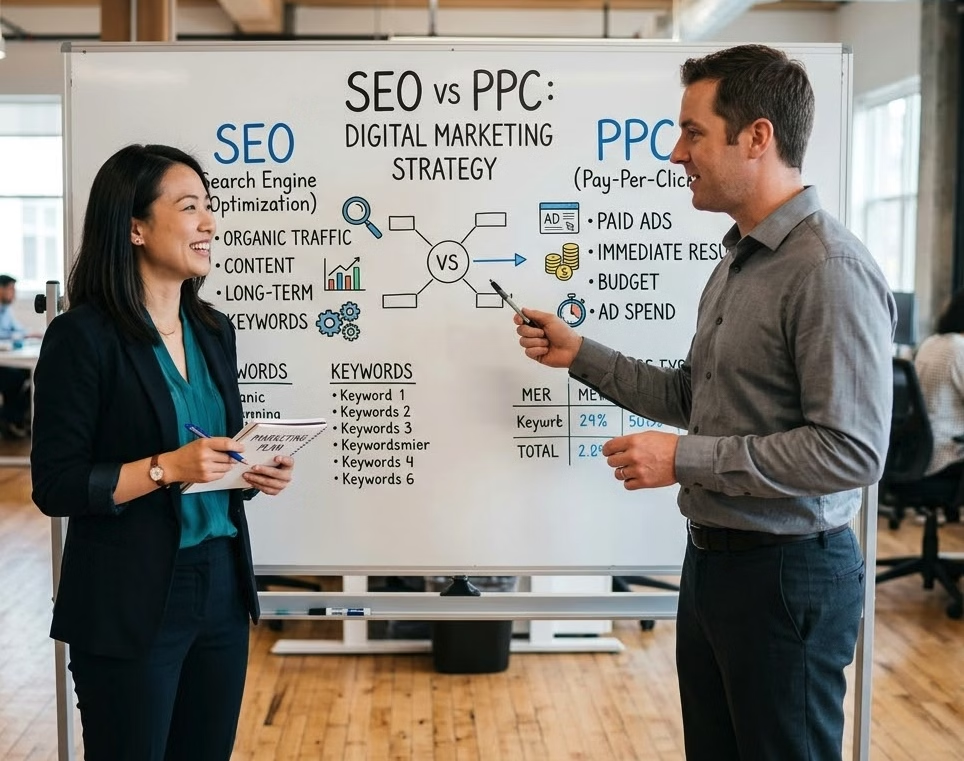
When businesses embark on digital marketing, the debate between SEO (Search Engine Optimization) and PPC (Pay-Per-Click) advertising emerges as a critical strategic fork in the road. Understanding the fundamentals and intrinsic differences between these two channels is not just academic—it directly impacts how effectively you allocate budget, optimize for long-term growth, and measure return on investment (ROI). This section meticulously unpacks the mechanisms behind SEO and PPC, while illuminating their distinct business implications through data-backed insights and nuanced analysis.
What is SEO? The Organic Growth Catalyst
SEO is the process of optimizing a website to rank higher in organic search engine results pages (SERPs) for targeted keywords. Unlike paid advertising, SEO’s value is earned and cumulative, relying on content quality, technical website infrastructure, user experience, and backlink authority. The primary objective is to increase visibility in a way that naturally attracts users actively searching for products, services, or information your business offers.
To put this into perspective, data from BrightEdge shows that 53.3% of website traffic originates from organic search, underscoring SEO’s dominance in driving sustainable web traffic. However, SEO’s benefits are not instantaneous: it demands strategic content creation, ongoing technical audits, and adaptive link-building over months or even years to achieve and maintain top rankings.
Consider the example of a B2B SaaS company investing in detailed, solution-oriented blog content targeting long-tail keywords. Over 12 months, the content gains backlinks, improves domain authority, and steadily climbs SERPs, resulting in a 150% increase in organic leads without additional ad spend. This compounding effect is the hallmark of effective SEO.
What is PPC? The Immediate Visibility Engine
PPC advertising, primarily through platforms like Google Ads and Microsoft Advertising, involves bidding on keywords to display ads prominently above or alongside organic search results. Advertisers pay a fee each time a user clicks the ad—hence “pay-per-click.” Unlike SEO, PPC provides immediate visibility, making it a powerful tool for rapid customer acquisition, product launches, or time-sensitive promotions.
According to WordStream, the average cost per click (CPC) across industries is about $2.69 on Google Ads. However, in competitive verticals like legal services or insurance, CPCs can exceed $50, dramatically impacting customer acquisition cost (CAC). The precision targeting options in PPC—geography, device, time of day, and user intent—enable businesses to tightly control budget and audience segmentation.
Take, for instance, an e-commerce brand launching a new product line. By deploying PPC campaigns targeting high-intent keywords such as “buy [product] online,” the brand can generate immediate traffic and sales within days. This immediacy, however, comes with a caveat: once the ad spend stops, the traffic evaporates, highlighting PPC’s rented rather than owned nature.
Key Differences Between SEO and PPC: A Data-Driven Breakdown
| Aspect | SEO | PPC |
|---|---|---|
| Cost Model | Primarily time and resource investment; ongoing maintenance costs | Pay per click; budget directly tied to ad spend |
| Time to Results | Medium to long term (3-12 months for significant impact) | Immediate (within hours or days) |
| Traffic Sustainability | Cumulative and compounding; traffic grows as authority builds | Temporary; traffic stops when budget is paused or exhausted |
| User Intent | Captures broad to specific intent via content targeting | Captures high-intent queries with precise bidding |
| ROI Measurement | Complex; influenced by multiple indirect factors over time | Direct and immediate; ROI can be measured per campaign |
| Brand Equity Impact | Enhances credibility and organic presence long-term | Boosts short-term visibility; less impact on brand authority |
The Business Implications of These Differences
The fundamental divergence between SEO and PPC lies in the nature of their value delivery: SEO builds an owned asset, whereas PPC rents immediate but transient visibility. This difference dictates strategic decision-making depending on business goals, budget constraints, and competitive landscape.
For startups and businesses seeking rapid market penetration or validating new products, PPC’s immediacy is invaluable. However, its high CAC and dependency on ongoing spend demand rigorous optimization and clear ROI tracking. Conversely, businesses prioritizing sustainable growth and brand authority must invest in SEO despite the longer ramp-up time, reaping compounding traffic and lead generation benefits.
A Harvard Business Review study revealed that 60% of marketers consider SEO the channel with the highest long-term ROI, while 40% rely heavily on PPC for short-term performance marketing. This statistic reflects a broader trend: companies that integrate both, leveraging PPC for immediate impact and SEO for durable growth, outperform those that rely solely on one channel.
In summary, mastering the fundamentals of SEO and PPC—and their nuanced differences—is the prerequisite for crafting a tailored digital marketing strategy that balances immediate goals against sustainable growth. The subsequent sections will dissect ROI metrics, customer acquisition costs, and hybrid strategies to outpace competitors in today’s fiercely contested digital marketplace.
2. ROI ANALYSIS: LONG-TERM GAINS OF SEO VS. IMMEDIATE IMPACT OF PPC
When dissecting the ROI of SEO versus PPC, the conversation transcends simple cost comparisons and ventures into the strategic implications of time, sustainability, and scalability. Businesses must understand that SEO and PPC are not merely alternative marketing channels but fundamentally different investment vehicles with distinct ROI timelines and value propositions. This section dives deep into the nuances of ROI for both strategies, supported by empirical data, theoretical frameworks, and real-world case studies to illuminate how each functions as either a long-term asset or a short-term accelerator.
Understanding ROI in SEO: The Power of Compounding Returns
SEO’s ROI is best understood through the lens of compounding value. Unlike PPC, SEO investments appreciate over time, building cumulative authority and traffic that can sustain and grow without proportional ongoing expense. This compounding effect is rooted in the fundamental mechanics of search engines: as your site accrues backlinks, optimizes its content, and improves user experience, its rankings improve, driving exponentially increasing organic traffic.
A landmark study by Ahrefs analyzed over 2 million keywords and found that the top 3 organic search results capture roughly 55% of all clicks. This means sustained top rankings translate to a dominant share of the market’s attention and potential conversions — with zero incremental cost per click after the initial content and optimization investment.
Consider the example of a mid-sized e-commerce company that invested $50,000 in a comprehensive SEO strategy over 12 months — including technical audits, content creation, and link-building campaigns. By month 18, organic traffic had increased by 120%, and monthly revenue attributed to organic search had tripled. Crucially, the ongoing monthly SEO maintenance budget was just $3,000, while the revenue gains persisted and even grew. The ROI curve for SEO, therefore, looks like an upward-sloping exponential curve, with initial costs tapering off and returns escalating.
Theoretical frameworks such as the “SEO Flywheel Effect” illustrate this well: initial optimization spins the wheel slowly, but as content accumulates, user signals improve, and backlinks grow, the flywheel accelerates, making each subsequent investment more efficient. This flywheel effect compounds ROI, making SEO a strategic asset that builds equity in your brand and digital real estate.
Decoding PPC ROI: Immediate, Measurable, but Rented Value
PPC operates on a fundamentally different ROI timeline: it delivers immediate, measurable results but does so by renting visibility rather than owning it. Every click is paid for, and the moment budget stops, so does the traffic. This immediacy is a double-edged sword — perfect for campaigns requiring instant impact but costly and unsustainable as a sole acquisition channel.
Data from WordStream indicates that the average cost per click (CPC) across industries ranges from $1 to $2, but in competitive verticals like finance or legal, CPCs can soar above $50. This means that while PPC can quickly drive leads, the cost to acquire each customer (CAC) can be prohibitively high, especially without rigorous campaign optimization.
A practical example comes from a SaaS company that allocated $100,000 to PPC over six months. While they generated 5,000 leads, their CAC was $20, and only 10% of leads converted to paying customers, inflating acquisition costs further. The key insight here is that PPC ROI is highly sensitive to conversion rates, quality score, and bid management. Without continuous optimization, PPC campaigns risk burning through budgets without sustainable profitability.
However, PPC’s strength lies in precision targeting and speed. Campaigns can be tailored instantly to demographics, geographies, and keywords, delivering immediate qualified traffic. This immediacy is invaluable for product launches, seasonal promotions, or testing new markets where waiting for SEO traction is not feasible.
Comparative ROI Metrics: Customer Acquisition Cost and Lifetime Value
To truly compare SEO and PPC ROI, businesses must analyze two critical metrics in tandem: Customer Acquisition Cost (CAC) and Customer Lifetime Value (CLV). SEO typically drives a lower CAC because organic rankings reduce the need for continuous ad spend. According to a BrightEdge report, organic search can have a 60-70% lower CAC than paid search on average.
In contrast, PPC’s CAC is often higher due to direct payment per click and bid competition. But when paired with precise targeting and optimized landing pages, PPC can attract high-value customers with larger CLVs, offsetting upfront costs. For example, a luxury goods retailer might accept a $100 CAC via PPC if the average purchase value is $1,000 and repeat purchases are common.
| Metric | SEO | PPC |
|---|---|---|
| Cost Per Acquisition (CPA) | $20 – $50 (varies by industry) | $30 – $150 (highly variable) |
| Time to ROI | 6-12 months (long-term compounding) | Immediate (days to weeks) |
| Sustainability | High (organic equity) | Low (rented traffic) |
| Scalability | Gradual, requires ongoing content & links | Instant, budget-dependent |
Integrating ROI Strategies: Leveraging SEO and PPC Synergistically
An advanced ROI strategy does not pit SEO against PPC but combines their strengths to maximize customer acquisition and lifetime value. For instance, PPC campaigns can be used to test keyword viability and conversion funnels rapidly; the data gleaned can then inform SEO content strategy for long-term organic growth.
Moreover, PPC can fill gaps in the sales funnel where SEO has yet to gain traction, such as new product launches or geographic expansions. Conversely, SEO reduces reliance on paid channels by building organic authority, which lowers overall marketing spend and improves profit margins over time.
A compelling case study is HubSpot, which leveraged PPC to drive immediate traffic during rapid product expansions while simultaneously investing heavily in SEO to build lasting inbound channels. This dual approach allowed HubSpot to maintain steady growth without the volatility of purely paid acquisition.
In summary, businesses must evaluate their immediate cash flow needs, market competition, product lifecycle, and long-term vision when deciding how to allocate budgets between SEO and PPC. A nuanced understanding of ROI timelines and compounding value ensures smarter investments and sustainable growth.
3. Customer Acquisition Cost: Evaluating Efficiency and Budget Allocation
Customer Acquisition Cost (CAC) is the cornerstone metric that determines the financial health and scalability of any marketing strategy. When comparing SEO and PPC, understanding CAC is not just about which channel has a lower upfront cost; it’s about dissecting how each channel’s cost structure, efficiency, and long-term impact align with your business objectives and budget constraints. In this section, we’ll analyze the nuanced differences in CAC between SEO and PPC, backed by industry data, case studies, and strategic budgeting frameworks.
Defining Customer Acquisition Cost: At its core, CAC is the total expense incurred to acquire a single customer, encompassing all marketing spend, personnel costs, and technology investments directly linked to the acquisition process. For SEO, these costs typically include content creation, link-building, technical audits, and ongoing optimization. For PPC, CAC is primarily driven by ad spend, management fees, creative production, and platform costs.
The Cost Structure of SEO
SEO’s CAC is front-loaded and heavily dependent on the quality and scale of content assets, site architecture improvements, and authoritative backlink acquisition. Unlike PPC, where costs are variable and directly tied to clicks and impressions, SEO investment is more fixed and cumulative. According to a 2023 study by Ahrefs, the average monthly cost for a mid-sized business to maintain a competitive SEO strategy ranges from $2,000 to $10,000, depending on industry competitiveness and niche complexity.
But here’s the critical nuance: SEO’s CAC decreases over time as organic rankings solidify and traffic volume grows without incremental spend. For example, a SaaS company investing $5,000/month in SEO might initially acquire customers at a CAC of $500, but after 12 to 18 months, CAC can drop below $150 as organic channels mature and content begins to rank consistently. This compounding effect is why SEO is often described as an investment in an appreciating asset.
However, the downside is that SEO’s CAC is highly sensitive to algorithm changes, competitive shifts, and content fatigue. A sudden Google algorithm update can erode rankings overnight, driving CAC back up as traffic and conversions dip. This variability underscores the importance of continuous optimization and diversification of SEO tactics to maintain a sustainable CAC.
The Cost Structure of PPC
PPC’s CAC is immediate and directly measurable. Each click has a fixed monetary value, which, combined with conversion rate data, allows for precise calculation of CAC. For example, if a business spends $10,000 on Google Ads and acquires 100 customers, the CAC is $100. This clarity is a powerful advantage for budget-conscious marketers who demand accountability.
However, PPC’s CAC is subject to volatility based on bid competition, quality score fluctuations, and seasonal demand. In highly competitive sectors like finance or insurance, average CPCs can skyrocket, driving CAC above $200 or more per customer. WordStream’s 2023 benchmark report highlights that industries such as legal and healthcare often experience average CPCs exceeding $5, making customer acquisition prohibitively expensive without rigorous campaign optimization.
Another critical consideration is that PPC’s CAC is essentially “rented” traffic. Once ad spend stops, customer flow halts immediately, unlike SEO, where rankings and traffic can persist. This means PPC requires continuous budget allocation to sustain acquisition flow, and scaling up is linearly tied to increased spend. This model offers unmatched speed and control but lacks the compounding, asset-building qualities of SEO.
Quantitative Comparison: SEO vs PPC CAC Benchmarks
| Metric | SEO (Average) | PPC (Average) |
|---|---|---|
| Initial CAC (First 6 Months) | $400-$600 | $100-$250 |
| Steady-State CAC (12–24 Months) | $100-$200 | $150-$300 |
| Scalability | Non-linear, dependent on content and authority growth | Linear, directly proportional to ad spend |
| Sustainability | High, with ongoing optimization and algorithm monitoring | Low, dependent on continuous budget injection |
This table illustrates that while PPC offers lower CAC initially and faster customer acquisition, SEO achieves more efficient CAC over time due to its compounding nature. The scalability differences mean businesses with deep pockets can ramp PPC quickly, but those seeking long-term profitability must invest in SEO to bring CAC sustainably down.
Strategically Allocating Budget Based on CAC Insights
The key to maximizing marketing ROI lies in intelligently balancing budget allocation between SEO and PPC based on your CAC benchmarks and business goals. For startups and businesses launching new products, PPC’s immediate CAC advantage justifies a higher initial spend to validate product-market fit and generate quick revenue.
Established businesses with steady cash flow should prioritize SEO spending to lower their long-term CAC and build brand authority. A hybrid approach is often optimal: allocate roughly 60-70% of acquisition budget to SEO for compounding growth and 30-40% to PPC for targeted campaigns, seasonal boosts, or entry into new markets. This ratio will vary depending on industry dynamics and customer lifetime value (CLV).
To illustrate, a mid-market eCommerce brand that tracked CAC over 24 months found that a 50/50 split between SEO and PPC led to a 25% reduction in overall CAC compared to a PPC-only strategy. The SEO channel’s organic traffic provided a steady baseline of low-cost customers, while PPC campaigns drove spikes in customer acquisition during product launches and discount seasons.
Advanced CAC Optimization Techniques for SEO and PPC
To further refine CAC, marketers must employ advanced data-driven techniques tailored to each channel:
- SEO: Utilize cohort analysis to track CAC trends by content type and keyword segment. Deploy predictive analytics to forecast ranking potential and prioritize content investments that promise lower CAC in the medium term. Implement technical SEO audits quarterly to prevent traffic losses that spike CAC.
- PPC: Leverage machine learning-powered bid management tools to optimize CPC and quality scores continuously. Segment campaigns by audience intent and device to identify pockets of lower CAC. Use A/B testing for ad creatives and landing pages to boost conversion rate and reduce CAC incrementally.
Ultimately, a CAC-driven strategy doesn’t just look at acquisition in isolation but integrates customer lifetime value (CLV) models to ensure acquisition costs are aligned with long-term revenue generation. For example, a SaaS business with a CAC of $200 may find PPC less viable if average CLV is $500, whereas SEO’s gradually reducing CAC to $100 aligns perfectly with sustainable growth.
4. THE COMPOUNDING VALUE OF SEO COMPARED TO THE RENTED VALUE OF PPC
In the eternal debate of SEO versus PPC, one of the most critical distinctions—and often the most overlooked—is the fundamental difference between the compounding, long-term value of SEO and the rented, transient value that PPC provides. Understanding these contrasting value paradigms is essential for businesses aiming to optimize their marketing budgets and maximize sustainable revenue growth. What follows is a granular, data-driven exploration of these two value models, supported by real-world case studies and economic theory, to clarify why SEO’s cumulative benefits create a lasting competitive moat, while PPC’s strength lies in immediacy and control.
SEO as a Compound Interest Machine
SEO’s defining characteristic is its capacity to generate compounding returns over time. Unlike a linear marketing spend, SEO investment behaves like compound interest in finance: initial efforts amplify subsequent results exponentially, assuming consistent optimization and content growth. This phenomenon is well documented by numerous studies. For example, a 2023 BrightEdge analysis demonstrated that organic search drives approximately 53% of all website traffic, with top-ranking pages accruing traffic gains month-over-month without additional ad spend.
The mechanics behind this compounding effect are multifaceted:
- Content Accumulation: Each new SEO-optimized page or blog post adds to your site’s organic footprint, creating a growing inventory of inbound traffic sources.
- Authority Building: As your domain authority increases through backlinks and user engagement, existing pages climb higher in rankings, boosting clicks on older content without new investment.
- User Behavior Signals: Improved click-through rates (CTR), longer session durations, and lower bounce rates further feed algorithmic preference, reinforcing rankings.
- Algorithmic Momentum: Search engines reward consistent, quality content with progressively better visibility, meaning your site gains increasing prominence over time.
A compelling case study comes from HubSpot, which reported that their blog’s organic traffic grew by 2,000% over a five-year period, requiring minimal incremental investment after initial content creation and optimization efforts. This traffic surge was not linear but exponential, with older posts continually drawing new visitors months and years after publication.
Economically, SEO can be modeled as a capital asset that appreciates and yields dividends indefinitely. The initial “capital expenditure” is the upfront SEO work—keyword research, content creation, technical optimization—after which the “interest” manifests as steadily growing free traffic. Over time, the cost per acquisition (CPA) via SEO approaches zero, maximizing ROI. For example, a study by Ahrefs showed that 90% of pages receive no organic traffic, but those ranking on page one enjoy steady, self-sustaining traffic streams requiring minimal ongoing expense.
The Rented Roof: PPC’s Immediate but Impermanent Value
By contrast, PPC is akin to renting space on a billboard rather than owning the building. Your ads appear only as long as you pay, and traffic evaporates the moment the budget ceases. This rented value model provides undeniable advantages—speed, precision targeting, and control—but it lacks the permanence and cumulative benefits of SEO.
PPC’s value is transactional and immediate. According to WordStream data from 2024, the average click-through rate for Google Ads in the search network is 3.17%, and average cost-per-click (CPC) varies dramatically by industry—ranging from $1.00 in retail to over $50 in legal niches. While PPC campaigns can be finely tuned to deliver rapid customer acquisition, the moment ad spend stops, so too does the inflow of traffic and leads.
Consider the example of a national e-commerce retailer running aggressive PPC campaigns during holiday seasons. Their ROI spikes during campaign periods but returns to baseline immediately afterward. If they halt PPC spend, search visibility and traffic drop precipitously, as their organic rankings are insufficient to sustain volume.
Furthermore, PPC costs tend to inflate over time due to auction dynamics and competitive bidding. This inflation erodes margin and increases customer acquisition cost, especially in saturated markets. A 2023 SEMrush report highlights a year-over-year average CPC increase of 12% across major verticals. Without the compounding benefit, PPC is a perpetually costly endeavor.
Integrating the Two: Leveraging SEO’s Compounding Strength with PPC’s Rented Agility
Savvy businesses recognize that SEO and PPC are not mutually exclusive but complementary strategies. The compounding value of SEO creates a baseline of organic traffic and brand authority, reducing reliance on costly paid ads over time. Concurrently, PPC campaigns can be employed tactically to capture immediate demand spikes, test new keywords, or dominate highly competitive terms where SEO gains are slow to materialize.
An advanced implementation framework involves:
| Step | Description | Business Impact |
|---|---|---|
| 1. Keyword & Market Research | Identify high-value keywords with PPC data insights to prioritize SEO content creation. | Maximizes SEO efforts on terms with proven conversion potential. |
| 2. Launch PPC for Immediate Traffic | Run PPC ads targeting keywords with low organic presence to generate leads quickly. | Captures immediate revenue and tests messaging efficacy. |
| 3. Develop SEO Content & Link Building | Create optimized, authoritative content and earn backlinks to grow organic rankings. | Builds long-term, self-sustaining traffic streams, reducing paid spend. |
| 4. Analyze & Adjust | Use PPC data to refine SEO targeting and vice versa. Adjust bids and content strategy accordingly. | Ensures continuous improvement and cost efficiency across both channels. |
| 5. Gradual Shift in Budget Allocation | As SEO rankings improve, decrease PPC spend on overlapping keywords to optimize ROI. | Maximizes overall marketing ROI by leveraging SEO’s compounding traffic. |
This integrative approach is exemplified by multinational enterprise Salesforce, which reported a 30% reduction in paid search spend over three years as organic rankings matured, while maintaining lead volume by reallocating budgets to SEO-driven content marketing.
Key Takeaway: Businesses that treat SEO as a long-term capital asset and PPC as a short-term tactical tool unlock the full spectrum of digital marketing ROI. The compounding value of SEO builds a durable foundation of free, high-intent traffic, while PPC delivers precision bursts of demand capture. Ignoring either dimension is a strategic mistake that leaves growth on the table.
5. INTEGRATING SEO AND PPC STRATEGIES FOR MAXIMUM REVENUE AND GROWTH
In the binary debate of SEO versus PPC, the real power—and profitability—lies not in choosing one over the other but in the deliberate, data-driven integration of both. Businesses that master this synergy unlock a multiplier effect on revenue, customer acquisition, and brand equity that neither channel can achieve independently. This section dives deep into the granular tactics, underlying data, and strategic frameworks that enable companies to orchestrate SEO and PPC in concert, thereby maximizing growth sustainably and efficiently.
The Complementary Dynamics of SEO and PPC
SEO and PPC operate on fundamentally different timelines and mechanisms but converge on the same goal: attracting qualified traffic and converting that traffic into revenue. SEO’s compounding value means it builds equity over months or years, reducing customer acquisition cost (CAC) as organic rankings improve. PPC, conversely, delivers immediate visibility by placing ads in front of motivated searchers but incurs ongoing costs without residual asset value once spend stops.
Integrating these channels leverages PPC’s immediacy to provide real-time market intelligence that informs SEO strategy, while SEO’s sustained presence amplifies PPC’s efficiency by reducing overall reliance on paid clicks. According to a 2023 report by Search Engine Land, advertisers who combine SEO and PPC see an average 25% increase in overall click-through rate (CTR) compared to running either channel alone, illustrating the tangible synergy.
Data-Driven Keyword Strategy: Leveraging PPC Insights for SEO Wins
One of the most actionable integrations is using PPC keyword performance data to refine SEO targeting. PPC campaigns provide granular, immediate feedback on which keywords convert, their cost per acquisition (CPA), and user intent signals—data that SEO traditionally lacks due to latency in organic ranking shifts. For example, if a PPC campaign reveals high conversion rates and low CPA on a set of long-tail keywords, SEO teams can prioritize content creation and on-page optimization around these terms, accelerating organic traffic growth.
A case study from a leading e-commerce brand demonstrated that incorporating PPC-driven keyword insights into SEO efforts increased organic traffic by 40% over six months, while simultaneously reducing PPC spend by 15%, thus improving overall marketing ROI by nearly 30%. This exemplifies the virtuous cycle achievable when paid and organic teams share data and coordinate strategies.
Brand Domination Through Search Engine Real Estate
Controlling more search engine results page (SERP) real estate is a powerful growth lever. Combining SEO and PPC allows brands to dominate SERPs with multiple touchpoints—from paid ads, rich snippets, local listings, to organic results. This “double presence” strategy not only boosts CTR but also builds brand trust and authority.
Research from WordStream indicates that when a brand appears in both paid and organic results for the same query, the combined CTR can increase by up to 40%. For example, a B2B SaaS company that synchronized their PPC campaigns with SEO-optimized product pages experienced a 35% lift in qualified leads within the first quarter, attributing much of this success to the perceived brand dominance on SERPs.
Reducing Customer Acquisition Cost with Attribution and Bid Adjustments
One of the most sophisticated integrations involves multi-touch attribution modeling that credits both SEO and PPC touchpoints in the customer journey. By understanding the interplay between paid and organic visits, marketers can make informed bid adjustments and budget reallocations to reduce overall CAC.
For instance, if attribution data reveals that organic search frequently assists PPC conversions by introducing prospects early in the funnel, PPC bids on those keywords can be lowered without sacrificing volume, as organic traffic fills the gap. Conversely, PPC budgets can be increased on high-intent transactional keywords where SEO is slower to rank. This dynamic bidding strategy ensures maximum cost efficiency.
A Fortune 500 retailer applied advanced attribution modeling and bid automation, resulting in a 22% reduction in CAC and a 15% increase in conversion rate within six months. This data-driven orchestration of SEO and PPC spend exemplifies how integration moves beyond theory into measurable business impact.
Cross-Channel Remarketing and Funnel Optimization
Another critical facet of integration is the use of PPC remarketing campaigns targeted at organic visitors who did not convert initially. By implementing cross-channel tracking, businesses can segment organic traffic cohorts by behavior and lifecycle stage, then serve highly personalized PPC ads to re-engage these warm prospects.
Consider a B2C subscription service that noticed a 60% drop-off rate after organic users viewed pricing pages but did not subscribe. By launching remarketing ads tailored with dynamic offers and testimonials, the company recovered 18% of these drop-offs within three months, demonstrating how PPC can amplify the lifetime value of organic traffic.
Operational Best Practices for Seamless SEO and PPC Collaboration
Achieving these integrations demands organizational alignment and process rigor. Key best practices include:
- Unified Data Dashboards: Establish shared analytics platforms where SEO and PPC teams access real-time performance metrics and attribution data to guide joint decision-making.
- Regular Strategy Syncs: Weekly or bi-weekly meetings between SEO and PPC managers ensure alignment on keyword priorities, budget shifts, and campaign learnings.
- Shared KPIs: Move beyond siloed KPIs (organic traffic, CTR, CPC) toward combined metrics like total conversions, CAC, and customer lifetime value (CLV).
- Cross-Training: Equip SEO specialists with PPC fundamentals and vice versa, fostering empathy and collaborative problem-solving.
- Integrated Content Development: Coordinate content calendars so SEO-driven content supports PPC landing pages, enhancing Quality Scores and organic relevance simultaneously.
These operational pillars transform SEO and PPC from competing silos into a cohesive growth engine.
Final Thoughts: The Strategic Imperative of SEO-PPC Integration
In today’s hyper-competitive digital landscape, treating SEO and PPC as isolated channels is a strategic liability. The nuanced interplay of their strengths—SEO’s compounding, long-term value and PPC’s immediate, targeted impact—when harnessed together, drives superior ROI, reduces CAC, and accelerates revenue growth. Data-driven integration is not optional; it is essential for businesses that want to outpace competitors and dominate their markets.
If your business is ready to elevate its digital marketing strategy through expert SEO and PPC integration, Outpace SEO offers unparalleled expertise, custom analytics frameworks, and hands-on partnership tailored to your unique growth objectives. Contact us today to unlock your brand’s full revenue potential by harmonizing paid and organic search.